ECOWICE Study Finds Passion Fruit Farming Reduces Human–Elephant Conflict Near Mikumi National Park
Mikumi, Tanzania | 2025
A new study conducted by ECOWICE reveals that passion fruit farming is helping smallholder farmers reduce crop losses caused by elephants while improving household nutrition and income in communities surrounding Mikumi National Park.
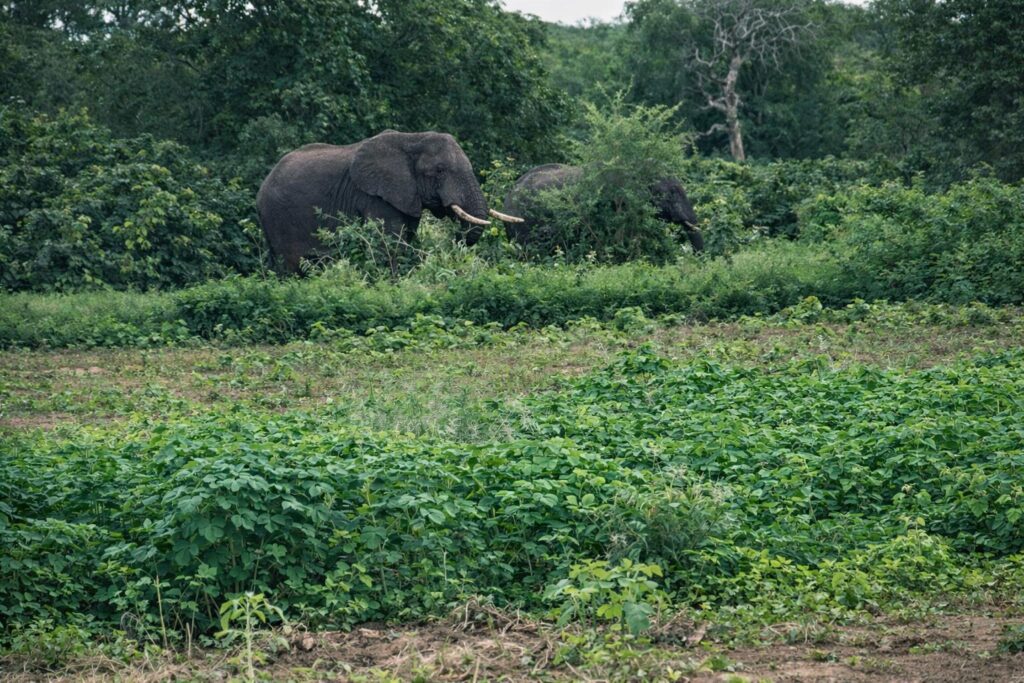
The research, carried out in 2025, focused on villages bordering Mikumi National Park—an area where farms overlap with wildlife corridors, resulting in frequent human–elephant conflict. For many years, farmers in these communities have faced repeated destruction of staple crops such as maize, rice, and cassava, threatening food security and household livelihoods.
A Crop Elephants Avoid
According to the study, passion fruit (Passiflora edulis) is emerging as a practical and low-risk coexistence crop. Farmers consistently reported that elephants do not feed on passion fruit, making it a safer alternative compared to traditional staples that attract wildlife.
“Elephants don’t eat it. It can be used like a fence,” one farmer explained during interviews.
As a result, many farmers are now planting passion fruit along farm boundaries or integrating it into mixed-cropping systems to reduce wildlife incursions. This approach allows farmers to protect vulnerable crops without relying on fences or harmful deterrents.
Improving Food Security and Income
Beyond reducing conflict, the study found that passion fruit plays a significant role in strengthening household food security and income diversification. Families consume the fruit at home, improving dietary diversity, particularly for children, while surplus harvests are sold in local markets.
“The benefit is that my children eat the fruit, that’s the main benefit,” one participant noted, highlighting the nutritional value of the crop for rural households.
Another farmer emphasized the income potential:
“Once you plant them, they become a cash crop. If you take good care of them, you can earn more.”
Because passion fruit requires relatively low inputs once established, farmers described it as an accessible option even for households with limited resources.
Learning from Each Other
The study involved 55 smallholder farmers, focus group discussions, and interviews with local leaders and conservation stakeholders. Findings show that adoption of passion fruit farming is driven not only by economic and nutritional benefits, but also by peer learning and community observation.
“I just liked to farm because I saw my peers farming,” one farmer explained, illustrating how seeing neighbors succeed encourages wider adoption.
This social learning dynamic has helped passion fruit spread organically within villages, strengthening community ownership of the approach.
The Role of Institutional Support
Institutional support emerged as a key factor in successful adoption. Training, seedling distribution, and technical guidance provided through ECOWICE-led programs enabled farmers to establish trellises, manage pests, and maintain productive vines.
At the same time, the study highlights ongoing challenges, particularly limited market access and transportation barriers, which restrict farmers’ ability to sell produce consistently and at good prices. Addressing these constraints will be essential for scaling up impact.
A Non-Lethal Path to Coexistence
Overall, the findings underscore the potential of non-lethal, community-led approaches to human–wildlife conflict mitigation. By promoting crops that wildlife naturally avoid, communities can protect their livelihoods while supporting conservation goals around protected areas.
“This study shows that conservation and livelihoods do not have to be in conflict,” the report concludes. “With the right support, farmers can grow crops that nourish families, generate income, and reduce pressure on wildlife.”
ECOWICE plans to use the study’s findings to advocate for the integration of alternative crops such as passion fruit into district and national human–wildlife conflict mitigation strategies, particularly in buffer zones around Mikumi National Park.
About ECOWICE
Environmental Conservation for Wildlife and Community Enterprise (ECOWICE) is a Tanzania-based organization working with rural communities to promote human–wildlife coexistence through conservation education, sustainable livelihoods, and community-led innovation.